
Does VR simulation make your first cataract safer? The 2026 meta-analysis in 8 slides (visual abstract)
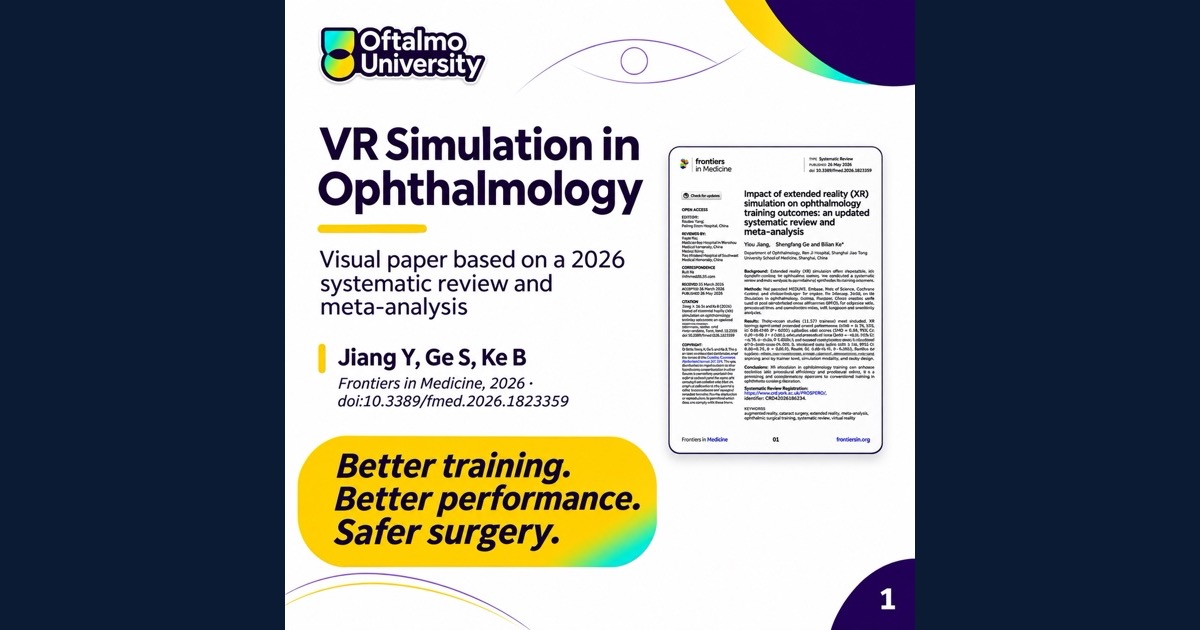
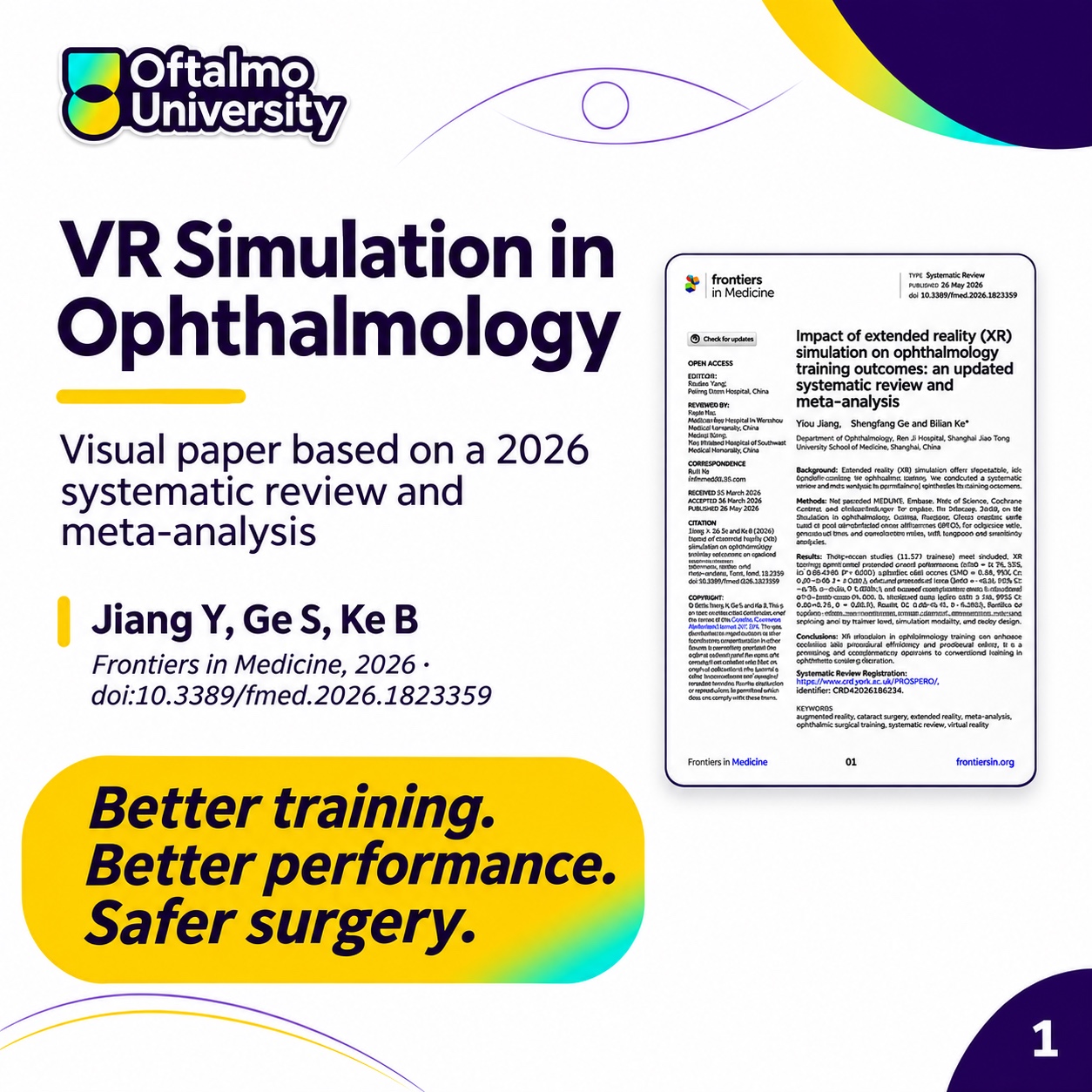
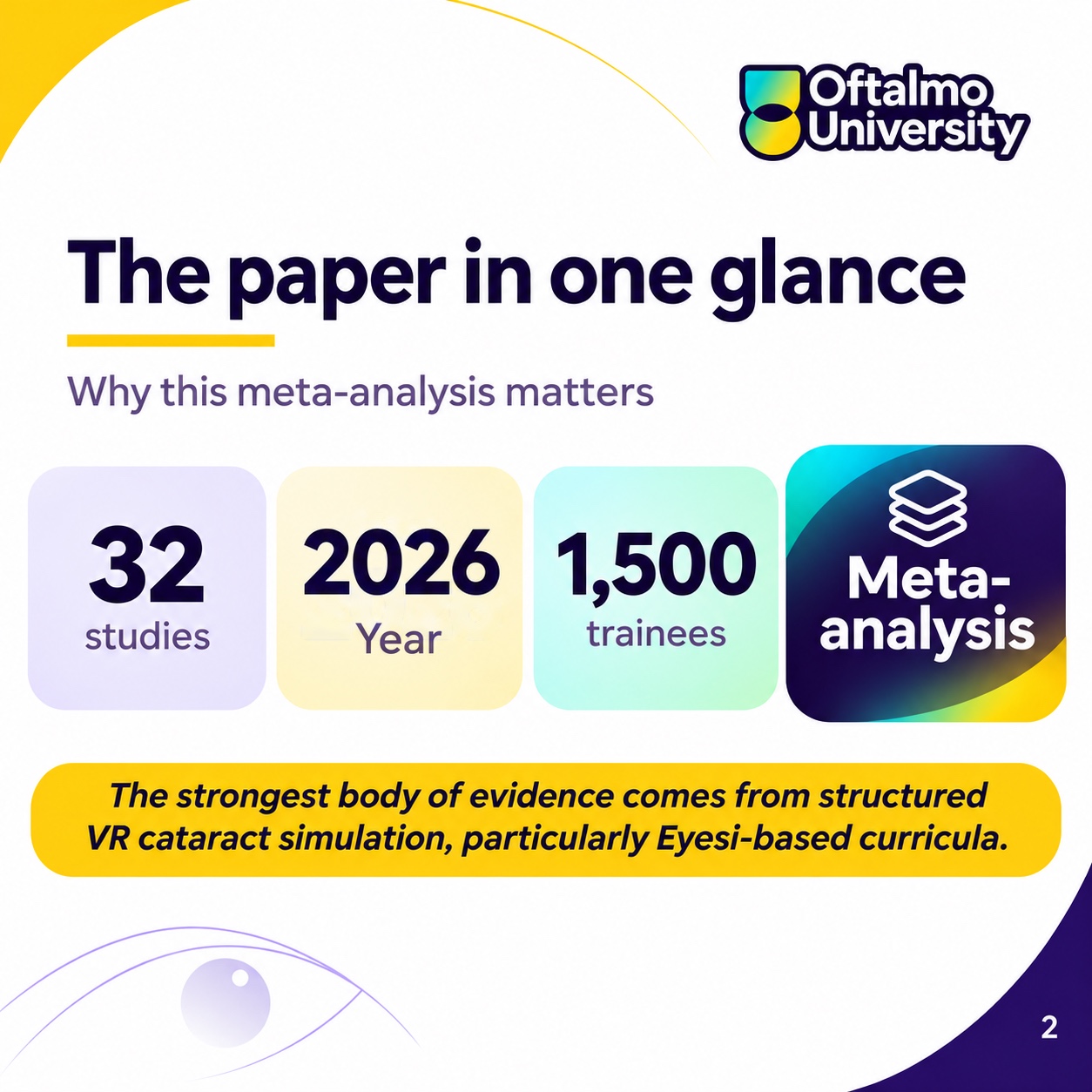
Is your first cataract safer if you trained on a simulator first? It is no longer an opinion. A 2026 meta-analysis of 32 studies and over 1,500 trainees has the answer, and we turned it into a visual abstract you can read in two minutes.
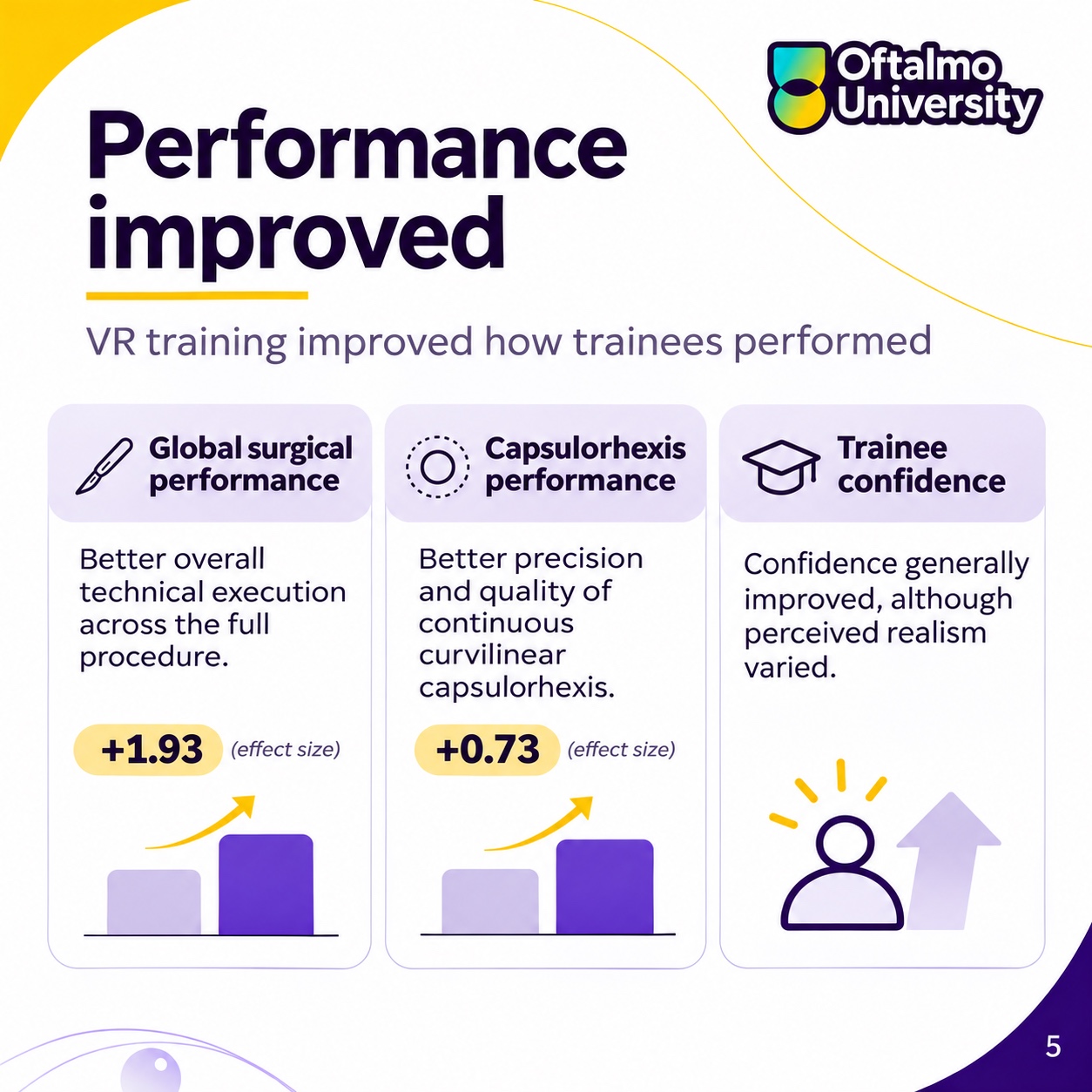
Every surgeon remembers the first capsulorhexis on a real eye. The question every resident, program director and mentor asks is the same: does time on a VR simulator actually change what happens in the operating room? Jiang, Ge and Ke pooled the evidence in Frontiers in Medicine (2026). The numbers are hard to ignore.
The answer in four numbers
Training with virtual reality simulation was associated with:
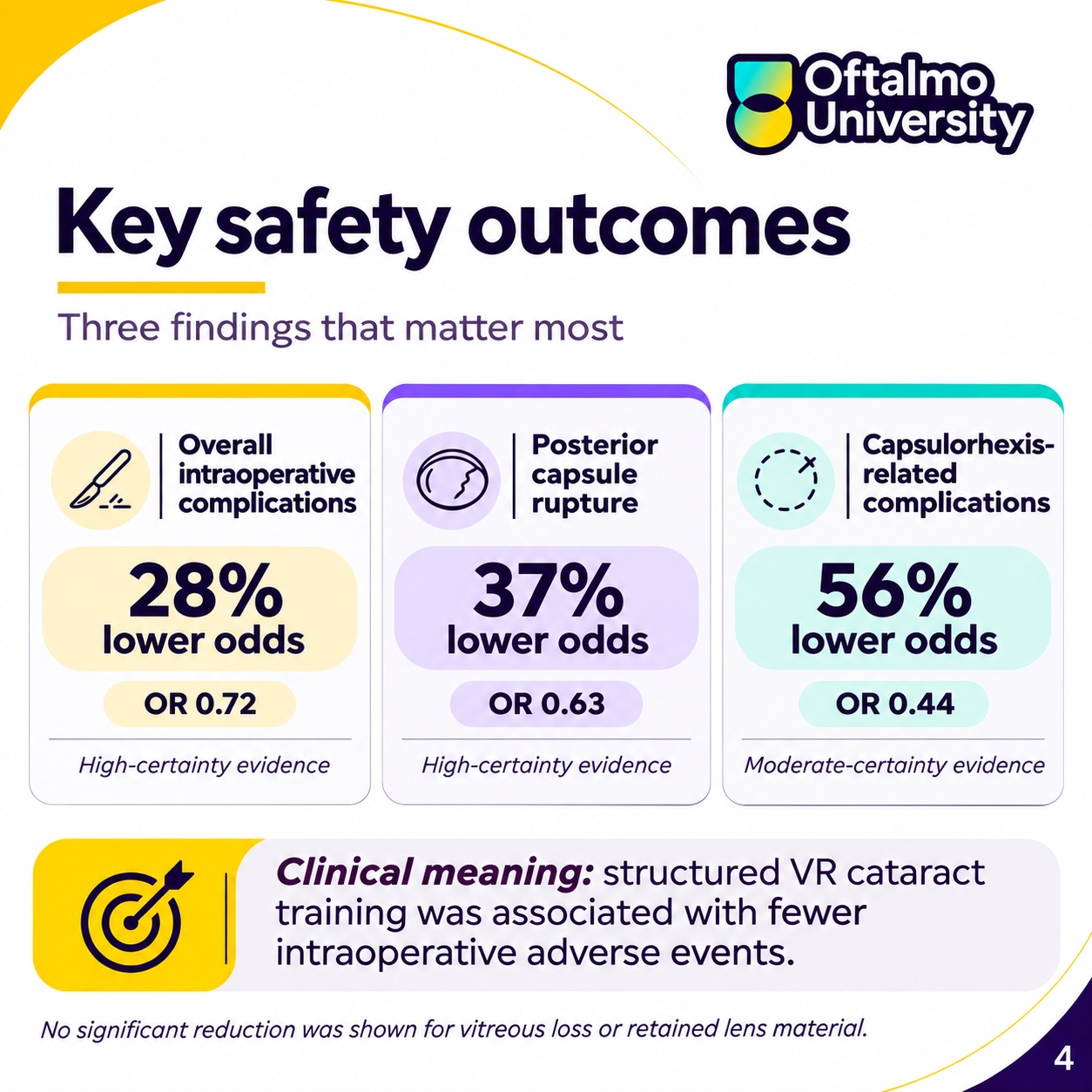
- 28% lower odds of intraoperative complications
- 37% lower odds of posterior capsule rupture
- 56% lower odds of capsulorhexis-related complications
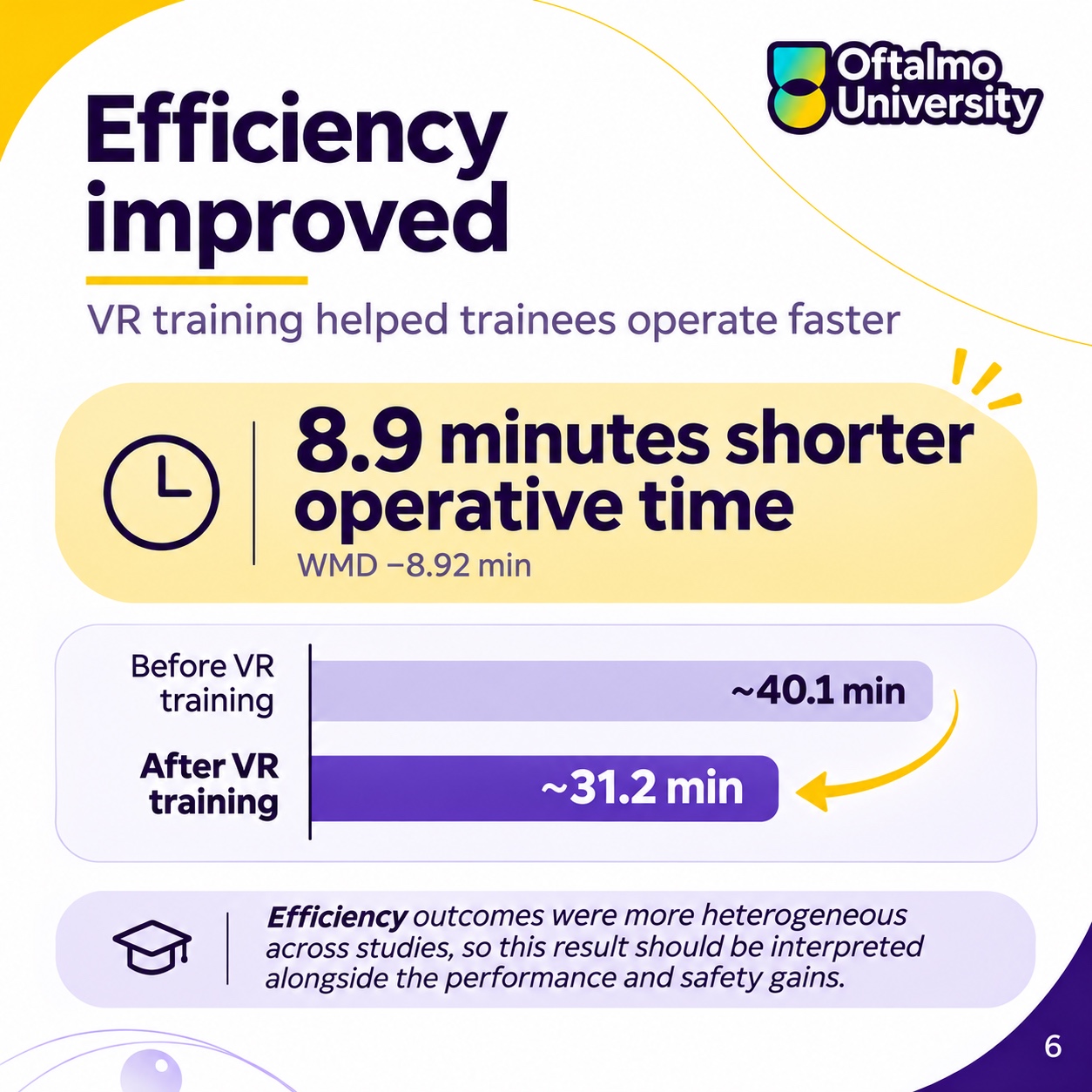
- 8.9 minutes shorter operative time
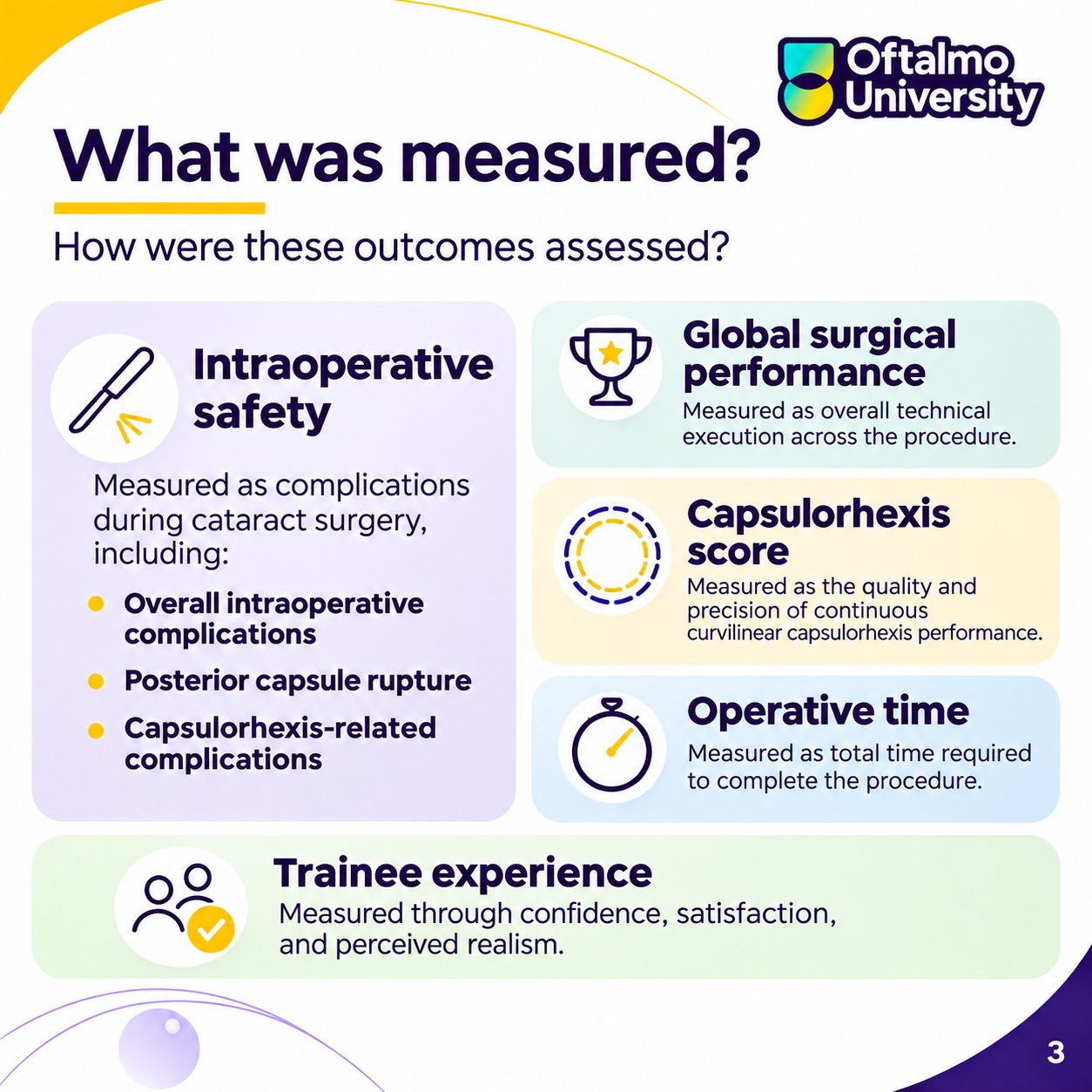
Scroll through the 8 slides below: what was measured, the safety outcomes, performance, efficiency, the take-home message, and which simulators were actually studied.
The visual abstract, slide by slide
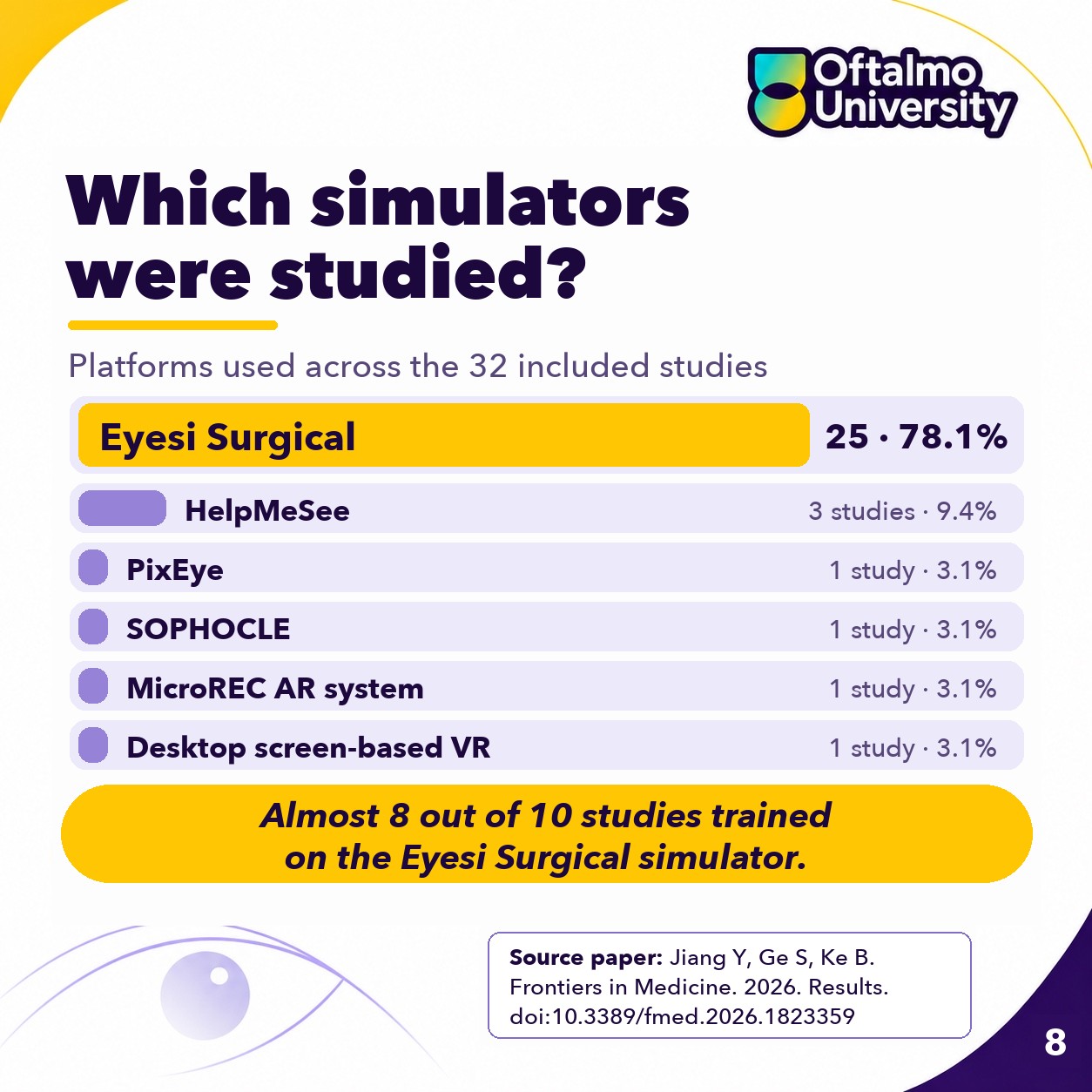
Which simulators?
Almost 8 out of 10 studies trained on the Eyesi Surgical simulator: 25 of the 32. HelpMeSee was used in 3, and PixEye, SOPHOCLE, MicroREC AR and a desktop VR system in one study each.
The part most people miss
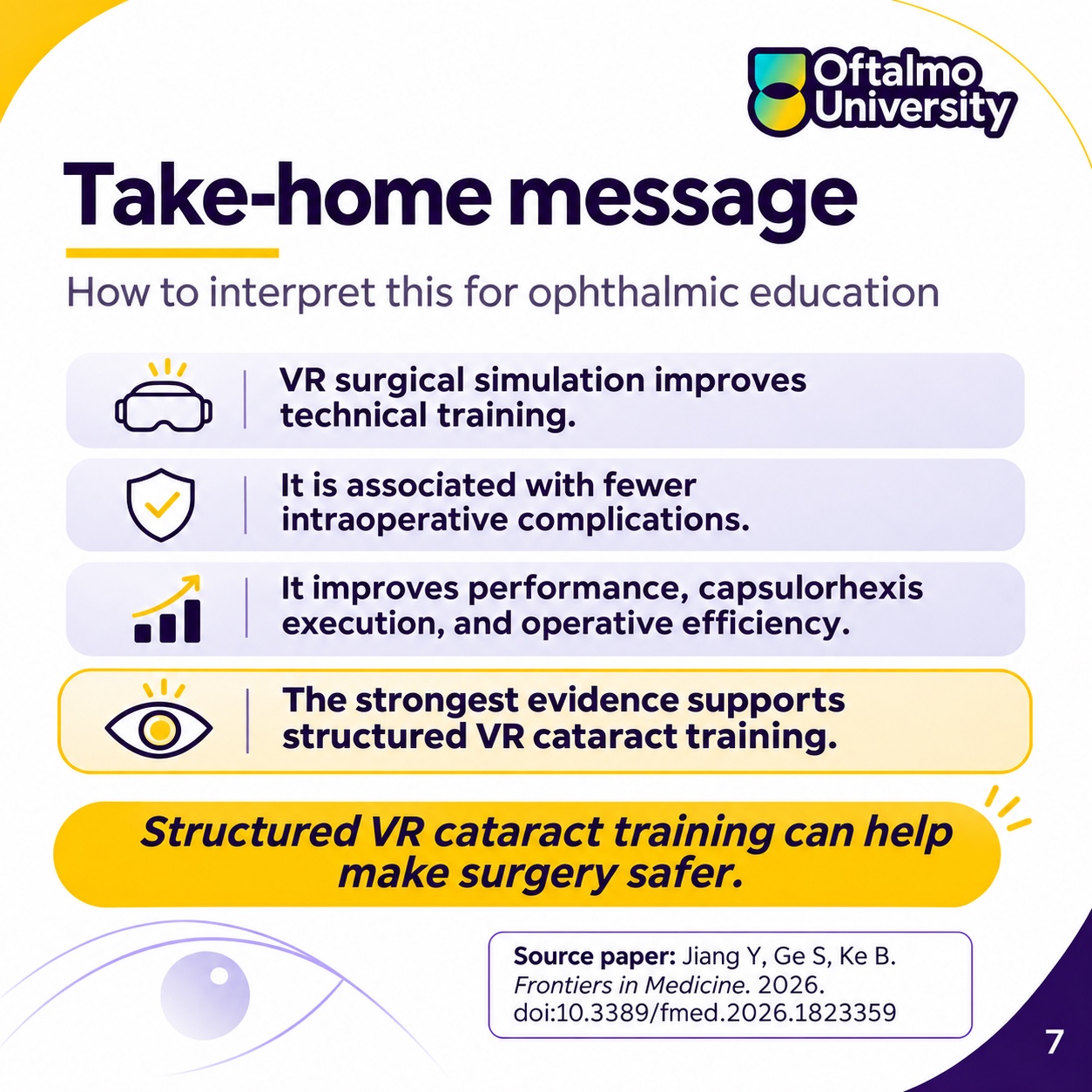
The strongest evidence supports structured training, not loose hours on a simulator. A simulator gives you repetitions. A curriculum, feedback and someone who has already made the mistakes you are about to make turn those repetitions into skill. Structure comes from a mentor.
Find yours: join PhacoMentors Premium →
Save this post and send it to the resident who is about to start operating. And tell us in the comments: how many simulator hours did you log before your first phaco?
En español, en 30 segundos
¿El simulador hace más segura tu primera catarata? Un metaanálisis de 2026 (32 estudios, más de 1,500 cirujanos en formación) lo responde: entrenar con realidad virtual se asoció con 28 % menos odds de complicaciones intraoperatorias, 37 % menos de ruptura de cápsula posterior, 56 % menos de complicaciones de la capsulorrexis y casi 9 minutos menos por cirugía. La evidencia más fuerte es para el entrenamiento estructurado, y la estructura la pone un mentor. Encuentra al tuyo en PhacoMentors Premium.
Source: Jiang Y, Ge S, Ke B. Impact of extended reality (XR) simulation on ophthalmology training outcomes: an updated systematic review and meta-analysis. Frontiers in Medicine, 2026. doi: 10.3389/fmed.2026.1823359. Visual abstract by Oftalmo University / PhacoMentors; figures as reported by the authors.
Your personal roadmap from the stage where you are today, video feedback on your own surgeries and a monthly call with Dr. Ivo Ferreira or an OU mentor. $6 a month.
Go Premium